About me
I am a postdoctoral fellow in the Windreich Department of Artificial Intelligence and Human Health at Icahn School of Medicine at Mount Sinai, specializing in AI-driven modeling and inference. I have obtained my PhD in the Biomedical Engineering program at New York University (NYU) Tandon School of Engineering, where I was advised by Dr. Rose T. Faghih at the Computational Medicine Lab (CML).
My research lies at the nexus of theory, computing, and data, where I developed state-space frameworks to infer latent physiological conditions from multimodal data. Due to the complex human anatomy and physiology, inferring underlying physiological conditions poses challenges such as inter-individual and intra-individual variability and sparsity of data. My research aims to address these challenges by employing personalized, automated, and system-theoretic toolboxes that can infer the underlying physiological condition and facilitate the diagnosis and treatment.
Selected Lines of Research
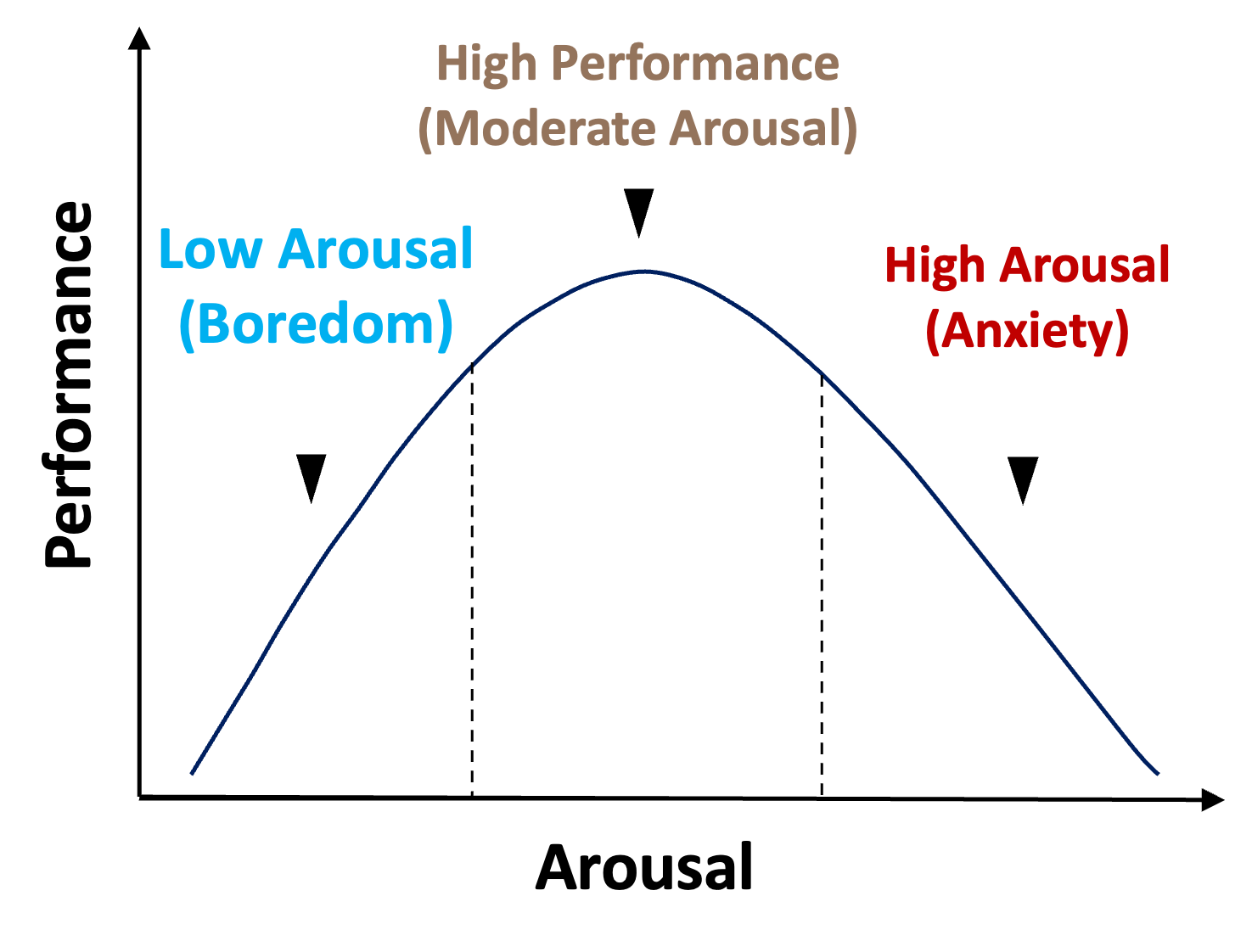
The cognitive arousal and performance are two hidden brain states that are linked closely, and the well-known Yerkes-Dodson law proposed an inverted-U link between the arousal and performance states. This line of research decodes these hidden states and identifies a mathematical model that can express the link between the decoded arousal and performance aligned with the Yerkes-Dodson law.
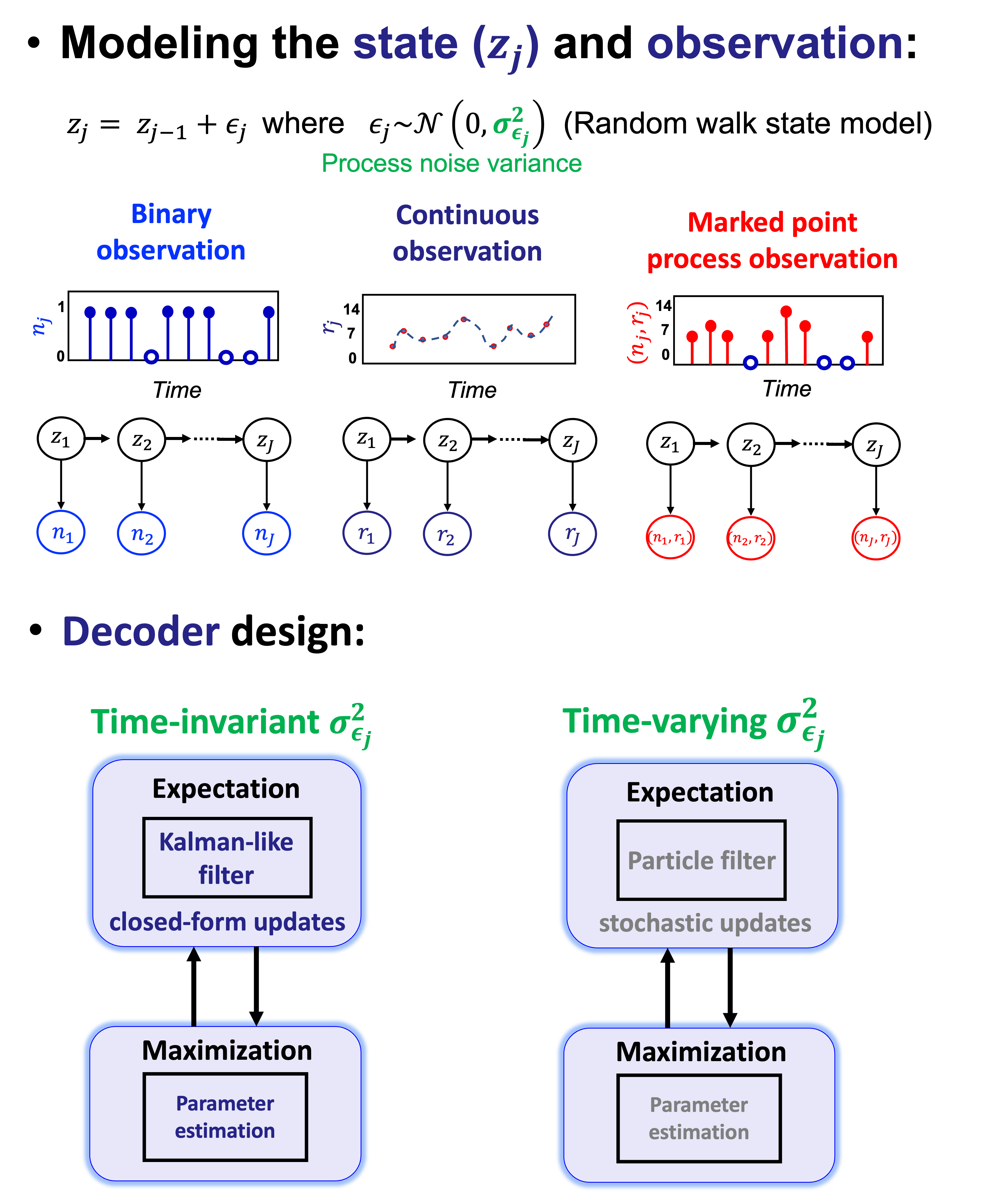
The cognitive performance state is often modeled by assuming a linear state model and time-invariant model parameters, such as process noise variance. Such assumptions may not resemble a real-world scenario in which the environmental stimuli can impact the hidden cognitive state and lead to a non-linear and time-varying process noise dynamic. This line of research explores the models and decoders that can account for the aforementioned impacts in a non-linear and time-varying paradigm.